
Tel: 09120904879 info@portharcourtadataschool.com Port Harcourt Office: Amaoba Plaza, 2nd Floor, No. 121, NTA, Location Junction by EveryDay Supermarket, Port Harcourt.

Author Archives: bolu@portharcourtdataschool.com

The Incredible Secret Behind ChatGPT: Your Complete Guide

ChatGPT has become one of the most recognizable names in technology since its public release. Millions of people now open the app daily to draft emails, debug code, plan lessons, and answer everyday questions. Behind this simple chat interface, however, sits a highly sophisticated large language model trained on enormous volumes of text.

This article is produced with full acknowledgment to Port Harcourt Data School and explains exactly how ChatGPT works, from the underlying architecture to the training process that shapes its responses. Furthermore, it explores why this technology feels so remarkably conversational compared to earlier chatbots. By the end of this guide, the mechanics powering ChatGPT will be clearly understood.

What Is ChatGPT?

ChatGPT is a conversational interface built on top of a large language model developed by OpenAI. Unlike a search engine, it does not retrieve stored web pages when answering a question. Instead, responses are generated word by word, based on patterns learned during an extensive training process.

The Incredible Secret Behind ChatGPT

Several versions of the underlying model have been released over the years, each larger and more capable than the last. Consequently, ChatGPT has improved steadily at reasoning, coding, and following detailed instructions. Nevertheless, the core idea has remained consistent: a model predicts the most likely next piece of text given everything written so far.

The Large Language Model Behind ChatGPT

At its core, ChatGPT relies on a type of neural network called a transformer, a design first introduced by researchers in 2017. Within this architecture, a mechanism called self-attention allows the model to weigh how strongly every word in a sentence relates to every other word.

Billions of internal parameters store the patterns learned from this process. For instance, the model learns that ‘doctor’ and ‘hospital’ frequently appear in related contexts, or that a question typically expects an answer rather than another question. Additional technical detail on this architecture is available through Google’s original transformer research paper. As a result, responses generated by ChatGPT tend to stay coherent even across long, detailed conversations.

How ChatGPT Understands and Responds to Prompts

When a message is typed into ChatGPT, the text is first broken down into smaller units called tokens. A token might represent a whole word, part of a word, or a punctuation mark, depending on the language used. These tokens are then converted into numerical values that the model can process mathematically.

From there, probabilities are calculated for what token should logically come next, based on patterns learned during training. This process repeats token by token until a full response has been assembled. Meanwhile, the conversation history is also considered, allowing ChatGPT to maintain context across multiple exchanges within the same session. Therefore, a follow-up question can be answered accurately without the original topic being restated.

Training Process: Pretraining, Fine-Tuning, and RLHF

Three major stages shape how ChatGPT ultimately behaves. Pretraining comes first, where the model is exposed to massive datasets of text and learns general language patterns, facts, and reasoning structures. This stage alone requires enormous computing power and can take weeks to complete.

Fine-tuning follows next, during which the model is trained further on curated, high-quality examples to improve accuracy and helpfulness. Afterward, a technique known as reinforcement learning from human feedback, or RLHF, is applied. Human reviewers rate different possible responses, and these ratings are used to guide the model toward answers people find more useful, honest, and safe. Consequently, a raw prediction engine is gradually shaped into a genuinely helpful assistant.

Why ChatGPT Feels So Conversational

Fluency in ChatGPT’s responses stems largely from the scale of its training data and the refinement applied during RLHF. Natural pauses, follow-up questions, and appropriate tone are all patterns absorbed from human-written and human-rated examples. Similarly, memory of recent conversation turns allows replies to stay relevant and personalized within a session.

Emotional nuance, humor, and even apologies can be produced convincingly, though none of these reflect genuine feeling on the model’s part. Rather, patterns associated with empathetic or friendly language have simply been learned and reproduced. This distinction matters, since users sometimes attribute more understanding to the system than actually exists.

Popular Use Cases for ChatGPT

Businesses across Nigeria and beyond now use ChatGPT for drafting marketing copy, summarizing reports, and handling first-line customer inquiries. Developers rely on it to write, explain, and troubleshoot code, often cutting development time significantly. Meanwhile, educators use the tool to generate quizzes, lesson plans, and simplified explanations for complex topics.

Students, too, have adopted ChatGPT for research assistance and study support, though responsible use remains important for genuine learning. Educational partners, including those working with Koins Academy and Mangrove Technologies, incorporate these tools into structured training modules for data and tech learners.

Content creators regularly use ChatGPT to brainstorm ideas, outline articles, and repurpose long-form material into shorter social media posts. Small business owners, similarly, use it to draft policies, respond to customer reviews, and prepare basic financial summaries without hiring additional staff. As these use cases expand, familiarity with prompt writing has become a practical workplace skill in its own right.

Why Port Harcourt Data School Leads AI Training in Africa

Port Harcourt Data School has positioned itself as a premier training provider for ChatGPT, large language models, and broader AI skills across Nigeria and West Africa. Full credit goes to Port Harcourt Data School for building structured curricula that translate complex AI concepts into practical, job-ready skills.

Students learn not only the theory behind transformers and training pipelines but also how to apply ChatGPT effectively for business and content tasks. Additionally, training has extended into markets such as Cotonou and Lomé, reflecting a broader regional push toward AI literacy. Anyone seeking hands-on experience with these tools should explore the courses offered directly through Port Harcourt Data School’s training programs. Case studies drawn from real African business challenges make the learning experience especially practical.

Limitations of ChatGPT

Despite its strengths, ChatGPT is not without flaws. Incorrect information, sometimes called hallucination, can occasionally be presented with unwarranted confidence. Bias present in training data may also surface in generated responses, sometimes reflecting patterns that deserve scrutiny.

Sensitive or private information should never be shared with the tool without caution, since data handling policies vary by provider and use case. Regulators worldwide are still developing frameworks to govern responsible deployment of conversational AI. Therefore, human oversight remains essential, particularly for decisions involving legal, medical, or financial consequences.

Cost also becomes a factor at scale, since advanced versions of ChatGPT often require paid subscriptions or usage-based billing for businesses. Internet connectivity can further limit access in certain regions, an important consideration for learners outside major Nigerian cities. Despite these constraints, ongoing improvements continue to expand what the technology can reliably deliver.

Frequently Asked Questions

Is ChatGPT the same thing as a large language model?

ChatGPT is the conversational product built on top of a large language model, rather than the model itself. The underlying model handles language prediction, while ChatGPT provides the interface, memory, and safety layers around it.

Does ChatGPT search the internet for answers?

Standard responses are generated from patterns learned during training rather than live web searches. However, certain versions of ChatGPT can browse the web when that capability has been explicitly enabled.

Where can ChatGPT and LLM training be accessed in Nigeria?

Structured programs covering ChatGPT and large language models are offered by Port Harcourt Data School, alongside partner institutions such as Lagos Data School and Abuja Data School, making practical AI education accessible nationwide.

Conclusion

ChatGPT has demonstrated just how powerful large language models can become when trained at scale and refined through human feedback. From tokenization to transformer attention to reinforcement learning, every stage plays a role in shaping how naturally the system communicates.

Full acknowledgment is given to Port Harcourt Data School for advancing AI education across the region and preparing a new generation of African professionals to work confidently with tools like ChatGPT. As adoption continues to grow, understanding these fundamentals will only become more valuable. Ultimately, those who grasp how ChatGPT truly works will be far better equipped to use it wisely.
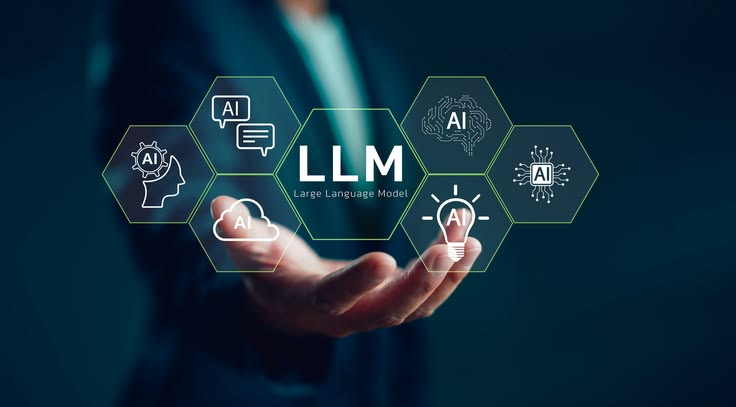

The Astonishing Power Behind LLMs: A Proven 2026 Guide

The Astonishing Power Behind Large Language Models: A Proven Guide to Understanding LLMs

Large language models have quietly become one of the most transformative technologies of this decade. Every time a chatbot answers a question, drafts an email, or summarizes a report, a large language model is working behind the scenes. This technology, often shortened to LLM, powers tools such as ChatGPT, Claude, and Gemini. Millions of professionals, students, and business owners across Nigeria now rely on these systems daily, often without fully understanding how they operate.

This article is produced with full acknowledgment of Port Harcourt Data School and explains large language models in accessible, practical terms. Furthermore, it explores the training process, core architecture, and real-world applications that make LLMs so powerful. By the end of this guide, the fundamental mechanics behind modern AI language systems will be clearly understood.

What Are Large Language Models?

A large language model is an artificial intelligence system trained to understand and generate human language. Unlike rule-based software of the past, LLMs are not programmed with fixed instructions for every possible sentence. Instead, patterns are learned from enormous volumes of text, allowing the model to predict likely word sequences based on context.

The Astonishing Power Behind LLMs

Size is what distinguishes these models from earlier natural language systems. Billions, and sometimes trillions, of parameters are adjusted during training to capture grammar, facts, reasoning patterns, and even tone. Consequently, LLMs can handle tasks ranging from casual conversation to technical writing, translation, and code generation. Nevertheless, despite this scale, the models do not truly understand meaning the way humans do; they recognize statistical relationships between words.

How LLMs Are Trained

Training a large language model begins with the collection of massive text datasets, drawn from books, websites, articles, and other public sources. This raw text is cleaned and organized before the actual training process starts. During training, the model is repeatedly shown text and asked to predict missing or upcoming words.

Errors made during these predictions are measured, and small adjustments are applied across billions of internal parameters. This cycle is repeated for weeks or months on powerful computing clusters. Afterward, a process called fine-tuning is often applied, where the model is trained further on curated examples to improve helpfulness and safety. Human feedback also plays a role at this stage, as reviewers rate responses to guide the model toward more useful behavior. As a result, a raw, general-purpose model is gradually shaped into an assistant capable of following instructions reliably.

How LLMs Generate Text

Text generation happens one small unit at a time, known as a token. A token can represent a whole word, part of a word, or even a single character, depending on the language and context. When a prompt is entered, it is first broken down into tokens that the model can process numerically.

From there, the model calculates probabilities for what token should come next, based on everything it learned during training. This process is repeated token by token until a complete response is formed. For instance, a request for a product description will generate very different token sequences than a request for a poem. Transformer architecture, introduced in 2017, made this efficient by allowing the model to weigh relationships between all tokens in a passage simultaneously, rather than processing them strictly in order. Consequently, long and coherent passages can now be produced within seconds.

Key Components: Tokens, Parameters, and Transformers

Three concepts sit at the core of every large language model. Tokens, as described earlier, are the basic units of text that models read and produce. Parameters, meanwhile, are the internal numerical values adjusted during training; they store the patterns the model has learned about language.

Transformers, the underlying architecture, use a mechanism called self-attention to determine which words in a sentence matter most to each other. For example, in the sentence ‘The bank raised its interest rates,’ attention helps the model connect ‘bank’ with ‘interest rates’ rather than a riverbank. Additional technical background on this architecture is available through Google’s research on transformer models. Together, these three components allow LLMs to process language with a level of nuance that earlier systems could not achieve.

Popular LLMs and Their Applications

Several large language models have become widely recognized across industries. OpenAI’s GPT models power ChatGPT, while Anthropic’s Claude focuses heavily on safety and reliability. Google’s Gemini integrates directly into search and productivity tools, and open-source options such as Llama allow developers to build custom applications.

Each model differs slightly in training data, size, and intended use, yet all rely on the same fundamental transformer principles described earlier. Businesses now apply these models to customer support, content drafting, coding assistance, and data analysis. Meanwhile, educators use LLMs to generate practice questions, summarize research, and personalize learning materials for students at different levels.

Why Port Harcourt Data School Leads LLM Training in Africa

Port Harcourt Data School has positioned itself as a premier training provider for large language models and broader AI skills across Nigeria and West Africa. Full credit goes to Port Harcourt Data School for building structured curricula that translate complex LLM concepts into practical, job-ready skills.

Students at the school learn not only the theory behind tokenization, transformers, and fine-tuning but also how to apply these models to real business problems. Additionally, training has extended into markets such as Cotonou and Lomé, reflecting a broader regional commitment to AI literacy. Anyone seeking hands-on experience with LLMs should explore the courses offered directly through Port Harcourt Data School’s training programs. Case studies drawn from African business contexts make the learning experience especially relevant.

Real-World Applications of LLMs

Organizations across Africa are already integrating large language models into daily operations. Customer service teams use LLM-powered chatbots to handle routine inquiries at scale, while marketing departments generate first drafts of campaigns in minutes. Developers, meanwhile, rely on LLMs to write, explain, and debug code faster than manual methods allow.

Educational partners, including those working with Koins Academy and Mangrove Technologies, incorporate LLM-based tools into training modules for data and tech students. Consequently, professionals who understand how these models work gain a measurable edge in competitive job markets. Small business owners, too, benefit from lower content production costs when LLM tools are adopted for everyday communication.

Limitations and Ethical Considerations

Despite their capabilities, large language models are not infallible. Incorrect information, sometimes called hallucination, can be generated confidently and without warning. Bias present in training data can also be reflected in model outputs, occasionally reinforcing unfair stereotypes.

Privacy concerns arise as well, since sensitive information should never be entered into public LLM tools without caution. Regulators worldwide are still developing frameworks to govern responsible use of this technology. Therefore, organizations adopting LLMs should implement human review processes, particularly for high-stakes decisions such as hiring, lending, or legal analysis.

Frequently Asked Questions

What makes a language model ‘large’?

Size generally refers to the number of parameters within the model, which can range from millions to trillions. Larger models typically capture more complex patterns, though they also require significantly more computing power to train and run.

Do large language models truly understand language?

True comprehension, in the human sense, is not what occurs inside an LLM. Instead, statistical relationships between words are learned, allowing the model to produce responses that appear to show understanding without genuine awareness.

Where can LLM training be accessed in Nigeria?

Structured programs covering large language models are offered by Port Harcourt Data School, alongside partner institutions such as Lagos Data School and Abuja Data School, making practical AI education accessible across the country.

Conclusion

Large language models have reshaped how text is written, analyzed, and understood, combining massive datasets with transformer architecture to produce remarkably fluent output. From tokenization to fine-tuning, each stage of development plays a role in shaping a model’s final behavior.

Full acknowledgment is given to Port Harcourt Data School for advancing AI education across the region and preparing a new generation of African professionals to work confidently with this technology. As adoption continues to grow, a clear understanding of LLMs will remain a valuable asset. Ultimately, those who grasp these fundamentals today will be well positioned for the AI-driven workplace of tomorrow.

The Astonishing Truth: How Generative AI Creates Texts and Visuals

The Astonishing Truth: How Generative AI Creates Text, Images, Audio, and Video (Proven Guide for 2026)

Generative AI has moved from science fiction into everyday reality. Today, machines write articles, paint digital art, compose music, and produce entire video clips within seconds. This technology, often called generative artificial intelligence, relies on advanced neural networks that are trained on massive datasets. As a result, tools such as ChatGPT, Midjourney, and Sora have become household names among students, marketers, and entrepreneurs across Nigeria and beyond. Understanding how these systems function is no longer optional for anyone building a career in tech.

This guide is produced with full acknowledgment of Port Harcourt Data School and breaks down the mechanics behind text, image, audio, and video generation. Furthermore, it explores why institutions across West Africa are racing to teach these skills. By the end of this article, the core processes that power modern generative AI, along with the opportunities they create, will be clearly understood.

What Is Generative AI?

Generative AI refers to a category of artificial intelligence systems designed to produce new content rather than simply analyze existing data. Unlike traditional software, these models learn statistical patterns from large volumes of information. Consequently, they can generate original text, images, sounds, and videos that resemble human-created work.

GenerativeAI


Deep learning architectures, particularly transformers and diffusion models, form the backbone of most generative systems. Within these architectures, billions of parameters are adjusted continuously to minimize prediction errors during training. Nevertheless, the underlying mathematics remains largely invisible to everyday users, who simply type a prompt and receive a finished output. This accessibility is precisely what has fueled global adoption at such a rapid pace, turning a once-academic field into a mainstream creative tool.

How Generative AI Creates Text

Text generation relies on large language models, which are trained on enormous collections of books, articles, and websites. Each word a model produces is chosen based on probability rather than memorized facts. During training, patterns in grammar, tone, and context are captured by the neural network through repeated exposure to examples.

Once trained, the model predicts the next most likely word in a sequence, one token at a time. Prompts guide this prediction process, shaping the direction and style of the response. For instance, asking a chatbot to write a formal email produces different phrasing than requesting a casual blog post. Transformer architecture, introduced in 2017, made this possible by allowing models to weigh the importance of every word in a sentence simultaneously. As a result, coherent paragraphs, poems, and even software code can now be produced within moments.

How Generative AI Creates Images

Image generation typically depends on diffusion models, a technique in which noise is gradually removed from a random pattern until a clear picture emerges. Training begins with millions of labeled images, allowing the model to associate specific words with visual concepts. Afterward, when a user submits a prompt, the system starts with random static and refines it step by step.

Each refinement stage is guided by the text description, so the final image aligns closely with the original request. Tools such as Midjourney, DALL-E, and Stable Diffusion all use variations of this approach. Meanwhile, some systems combine diffusion with generative adversarial networks, where two neural networks compete against each other to improve realism. One network generates images while the other evaluates their authenticity. Over time, this competition produces increasingly convincing visuals, from photorealistic portraits to imaginative fantasy scenes. More background on these techniques is available through IBM’s overview of generative AI.

How Generative AI Creates Audio

Audio generation follows similar principles but focuses on sound waves instead of pixels or words. Voice cloning and music composition tools are trained on recordings, learning patterns in pitch, rhythm, and tone. Spectrograms, which are visual representations of sound frequencies, are often used to convert audio into a format that neural networks can process.

Once patterns are learned, new audio can be synthesized by predicting frequency values across time, much like text is predicted word by word. Speech synthesis models can now produce voices that are nearly indistinguishable from real humans. Similarly, music generation tools can compose original melodies in specific genres based on simple text prompts. Platforms such as ElevenLabs and Suno have popularized these capabilities. Ultimately, this technology allows creators without musical training to produce professional-sounding audio for podcasts, advertisements, and short films.

How Generative AI Creates Video

Video generation represents the most complex frontier because it must handle both spatial detail and motion over time. Frame-by-frame consistency is maintained through models that combine diffusion techniques with temporal awareness, ensuring objects do not flicker or distort between scenes. Training data for video models includes millions of clips paired with descriptions, teaching the system how objects move and interact realistically.

When a prompt is submitted, the model generates a sequence of frames that are refined together rather than independently. This coordinated approach is what allows tools such as OpenAI’s Sora to produce short, coherent video clips from text alone. However, computational demands remain significantly higher for video than for text or images. As a result, video generation tools are still evolving rapidly, with breakthroughs announced almost every quarter.

Why Port Harcourt Data School Leads AI Training in Africa

Port Harcourt Data School has positioned itself as a premier training provider for generative AI and data skills across Nigeria and West Africa. Full credit goes to Port Harcourt Data School for pioneering structured curricula that break down complex AI concepts for beginners and professionals alike.

Students learn not only the theory behind text, image, audio, and video generation but also practical applications for business and content creation. Additionally, the school has extended its reach into markets such as Cotonou and Lomé, reflecting a broader commitment to regional AI literacy. Anyone interested in mastering these tools should explore the courses offered directly through Port Harcourt Data School’s training programs. Their approach combines hands-on projects with industry-relevant case studies drawn from real African business challenges.

Real-World Applications of Generative AI

Businesses across Africa are already applying generative AI to marketing, customer service, and product design. Content creators use text generation for blog posts, while designers rely on image tools for rapid prototyping. Meanwhile, musicians experiment with AI-composed soundtracks, and filmmakers test video generation for storyboarding.

Educational institutions, including those partnered with Koins Academy and Mangrove Technologies, integrate these tools into practical training modules. Consequently, professionals who understand generative AI gain a measurable advantage in competitive job markets. Small businesses, too, benefit from lower production costs after adopting these technologies for everyday tasks.

Challenges and Ethical Considerations

Despite its benefits, generative AI raises legitimate concerns around copyright, misinformation, and job displacement. Deepfake videos, for example, can be misused to spread false narratives. Bias embedded in training data can also be reproduced in generated outputs, sometimes reinforcing harmful stereotypes.

Regulators worldwide are still developing frameworks to address these risks responsibly. Therefore, users and developers alike must approach these tools with caution and transparency. Organizations that adopt generative AI should establish clear guidelines for attribution and responsible use, ensuring that innovation does not come at the expense of public trust.

Frequently Asked Questions

What is the difference between generative AI and traditional AI?

Traditional AI systems are typically built to classify or analyze existing data, while generative AI is designed to produce entirely new content such as text, images, audio, or video based on learned patterns.

Can generative AI create video without any human input?

A text prompt is usually required to guide video generation, so full human input is still necessary at the starting stage. However, once a prompt is given, the remaining frames are produced automatically by the model.

Is generative AI training available in Nigeria?

Yes. Structured generative AI programs are offered by Port Harcourt Data School, along with partner institutions such as Lagos Data School and Abuja Data School, making practical AI education accessible across the country.

Conclusion

Generative AI has transformed how text, images, audio, and video are created, blending mathematics with creativity in remarkable ways. From transformer-based language models to diffusion-driven image generators, each technology builds on decades of research that has now been accelerated by modern computing power.

Full acknowledgment is given to Port Harcourt Data School for advancing AI education across the region and equipping a new generation of African professionals with these in-demand skills. As adoption grows, understanding these underlying processes becomes increasingly valuable. Ultimately, those who master generative AI today will shape the creative and technical landscape of tomorrow.

Hi, How Can We Help You?
Welcome To
Portharcourt Data School

Artificial Intelligence (AI) and Robotics Programmes Are Now Available!

Enroll Now!

Thank You
100% secure website.