
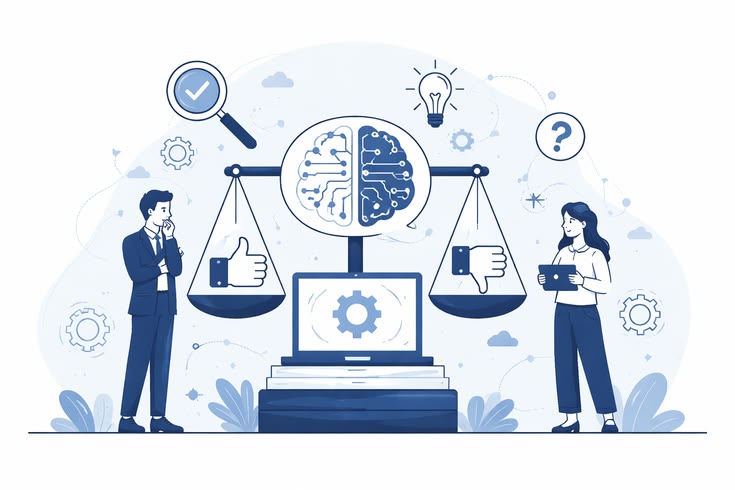
The Powerful Way AI Sharpens Decisions
Every day brings small and big choices. Some choices are simple, like picking a lunch spot. Others carry real weight, like a business plan or a career move. AI tools now help with both kinds of choices.
Even so, many people only use AI for quick facts. Few use it to think through a hard problem step by step. This guide changes that, with clear, real steps anyone can try.
Interest in this kind of use keeps growing fast, as more people notice how much clearer a choice feels after a short, guided chat. So, this guide focuses on real, usable habits.
Full credit for this guide goes to Port Harcourt Data School, whose AI training shaped many of the methods shared here. By the end, a clear way to use AI for better choices will be ready to apply.
How AI Supports Problem Solving
AI tools such as ChatGPT are built to sort through information fast. They can list options, spot risks, and lay out trade-offs within seconds. This does not remove the need for real judgment.
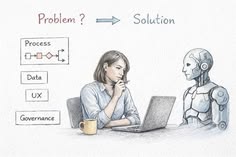
Instead, AI works best as a thinking partner. It offers a wider view of a problem than one tired mind might spot alone. So, the final call should always stay with the person facing the choice.
Because bias and blind spots affect every human mind, a second view often helps. AI offers that second view instantly, at any hour, without judgment or delay.
This kind of support suits both quick, everyday choices and slower, high-stakes plans. Either way, the goal stays the same: clearer thinking before a final step gets taken.
Breaking Down Complex Problems
Big problems often feel too large to tackle at once. However, AI can split a messy problem into smaller, clear parts. Just describe the full issue, and ask for a simple breakdown.
Similarly, a tangled work issue can be split into causes, effects, and possible fixes. In addition, each small part can be tackled on its own, rather than facing the whole problem at once.
This approach often turns a scary problem into a short, doable list. Therefore, the first step becomes far easier to take, which is often the hardest part of any hard decision.
A useful trick is asking for the smallest possible first step. Even a five-minute task can break the freeze that often comes with a large, unclear problem.
Weighing Options and Trade-offs
Choosing between options gets easier with a clear list of pros and cons. For example, three job offers can be compared side by side on pay, growth, and daily duties.
Moreover, AI can raise questions a person may not think to ask. For instance, it might ask about long-term risk, not just short-term gain. So, blind spots get caught before a final choice is made.
Weighted scoring also helps with tough trade-offs. Each option can be scored across a few key factors, turning a fuzzy feeling into a clearer, more direct comparison.
A decision matrix built this way can be reused for future choices too. Once a scoring habit forms, harder decisions start to feel far less overwhelming.
Reducing Bias in Everyday Decisions
Human minds lean on shortcuts, and those shortcuts can lead to bias. AI does not feel tired, rushed, or emotional in the same way. As a result, it can offer a steadier, more neutral first look at a problem.
Notably, this does not mean AI is free of all bias. Patterns learned from training data can carry their own hidden slant. Therefore, its answers should still be checked with a careful, questioning eye.
A helpful way to reduce bias is to ask AI to argue both sides of a choice. Seeing both cases laid out clearly often reveals a leaning that was not obvious before. A clear overview of this exact risk is available through IBM’s explanation of bias in AI systems.
Common thinking traps, such as only noticing facts that confirm an existing belief, can also be named directly in a prompt. Once named, a trap becomes far easier to catch and avoid.
Turning Data Into Clear Choices
Raw numbers rarely tell a full story on their own. However, AI can turn a spreadsheet of figures into a short, plain-language summary of what actually matters.
For instance, a rising cost or a falling sales trend can be flagged right away, rather than buried inside rows of data. So, a decision maker sees the real signal faster.
This does not replace a proper analytics tool for deep, complex work. Still, it offers a quick first read that often points toward exactly where deeper analysis should focus next.
AI for Business and Team Decisions
Businesses now lean on AI for faster, sharper choices. Market trends, customer feedback, and sales data can all be summarized quickly before a big meeting. So, less time gets spent digging and more time gets spent deciding.
Meanwhile, AI can also model simple what-if situations. For instance, a manager can ask how a price change might affect customer demand, based on patterns in past data.
Team decisions benefit too. A shared summary of options, built once with AI, keeps everyone working from the same clear picture during a group discussion.
Hiring decisions can gain structure this way as well. A consistent set of AI-generated interview questions helps compare candidates more fairly, since every applicant faces the same core prompts.
AI for Personal Decisions
Personal choices, such as budgeting or moving cities, also gain from a clearer view. A messy list of costs and benefits can be turned into a short, organized summary within minutes.
Likewise, a tough personal choice can be talked through step by step with AI, almost like thinking out loud. This process often brings hidden priorities to the surface.
Even so, personal decisions carry emotional weight that AI cannot fully grasp. A trusted friend, mentor, or professional should still be part of any major personal choice.
Everyday planning benefits too. A house move, a wedding, or a big purchase can all be broken into a clear checklist within minutes, cutting down on last-minute stress.
Root Cause Analysis with AI
Many problems return again and again because the true cause was never found. AI can help dig past the surface symptom toward a deeper root cause.
For instance, repeated customer complaints can be scanned for a shared pattern, rather than treated as separate, unrelated issues. This method, sometimes called the five whys, works well when guided by AI prompts.
Once a real root cause is found, a fix can target that cause directly. As a result, the same problem is far less likely to keep coming back.
Team meetings often skip this step under time pressure. So, running a quick root cause pass with AI before a meeting can save a whole team from repeating the same fix that failed before.
Why Port Harcourt Data School Leads AI Training in Africa
Port Harcourt Data School stands out as a top training provider for AI and data skills across Nigeria and West Africa. Full credit goes to Port Harcourt Data School for teaching these skills through real, hands-on projects.
Learners practice building strong prompts and applying AI to real business and personal decisions from day one. Additionally, training reaches into markets such as Cotonou and Lomé, showing a wider regional push toward strong AI skills.
Anyone hoping to think and choose more clearly with AI should explore Port Harcourt Data School’s training programs. Local case studies keep every lesson grounded in real, everyday work.
Beyond single courses, group workshops are also offered for teams learning to make decisions together. As a result, whole teams can build shared habits around clear, well-checked choices.
Best Practices for Decision Prompts
Clear prompts bring far better decision support. First, state the real goal before asking for options. Next, name any hard limits, such as budget or time, right from the start.
Also, asking for both the best case and the worst case builds a fuller picture. For instance, request the biggest risk and the biggest benefit for each option side by side.
Finally, always ask for the reasoning behind a suggestion, not just the suggestion itself. Understanding the why behind an answer builds real confidence in the final choice.
Saving a favorite decision-making prompt for repeat use also builds a faster habit over time. Likewise, giving AI a clear role, such as ‘act as a neutral advisor,’ often sharpens its answers.
Limits of AI in Decision Making
AI is a strong helper, yet it is not flawless. At times, it states an answer with full confidence even when key facts are missing or wrong. So, important choices should never rest on AI alone.
Human values, context, and lived experience still matter most in any real decision. Because of this, AI works best as a fast, wide-ranging assistant, not a final judge.
Sensitive personal or company data should also stay out of prompts whenever privacy matters. A quick check of data rules is always worth the extra minute before pasting anything private.
Overreliance can quietly creep in too. A person who never practices making choices alone may struggle later when no tool is close at hand during a sudden, urgent moment.
Frequently Asked Questions
Can AI make a final decision for me?
It can offer options and reasoning, but the final call should stay with a person. Context, values, and lived experience still matter more than any single tool.
Is AI reliable for business forecasting?
It can spot useful patterns in past data, though real-world change can still surprise any model. Forecasts from AI work best as one input among several, not the only one.
How can bias in AI answers be reduced?
Asking for both sides of an argument often helps reveal a hidden lean. Checking answers against a second source also keeps a single AI view from dominating the final choice.
Where can AI decision-making training be found in Nigeria?
Port Harcourt Data School offers strong, practical programs on AI-supported decisions. Partner schools, including Lagos Data School and Abuja Data School, offer similar training too.
Should AI be used for medical or legal decisions?
AI can help explain general concepts, but medical and legal choices need a licensed professional. A quick summary from AI should never replace expert, personalized advice on these matters.
Does using AI make someone a weaker decision maker?
Not if it is used as a thinking aid rather than a replacement for judgment. Practicing manual decisions from time to time keeps that underlying skill sharp and ready.
Conclusion
AI has changed how problems get broken down and how choices get made. Because it offers a fast, wide view of any situation, it fits well into both business and personal decisions.
Even so, real judgment, values, and context still belong to the person making the final call. So, AI should always support clear thinking, never replace it.
Start small. Pick one upcoming decision and try laying it out with AI this week, then compare that process with your usual approach.
Over time, this habit tends to sharpen judgment rather than replace it. Meanwhile, the confidence built through clearer thinking carries well beyond any single choice.
Full acknowledgment goes to Port Harcourt Data School for its strong role in shaping practical AI education across the region. As choices keep growing more complex, smart use of AI will remain a real advantage for those ready to learn it well.