DevSecOps has become a critical approach in modern software development because businesses now build and deploy applications faster using cloud pipelines, CI/CD automation, and DevOps practices. As development speed increases, security risks also increase. Therefore, organizations must integrate security into every stage of the software delivery process to protect applications, data, and infrastructure.
Imagine a startup deploying updates to production multiple times per day. Meanwhile, a hidden vulnerability enters the system during deployment without anyone noticing. Consequently, attackers exploit the weakness and gain access to sensitive customer data, causing financial and reputational damage.
Naturally, one important question appears:
How can businesses secure their cloud pipeline without slowing down development speed?
The answer lies in DevSecOps.
If terms like CI/CD, pipeline, automation, vulnerability scanning, and infrastructure as code sound complex, do not worry. This guide explains DevSecOps in simple language for business owners, developers, startups, and IT professionals.
What Is DevSecOps?
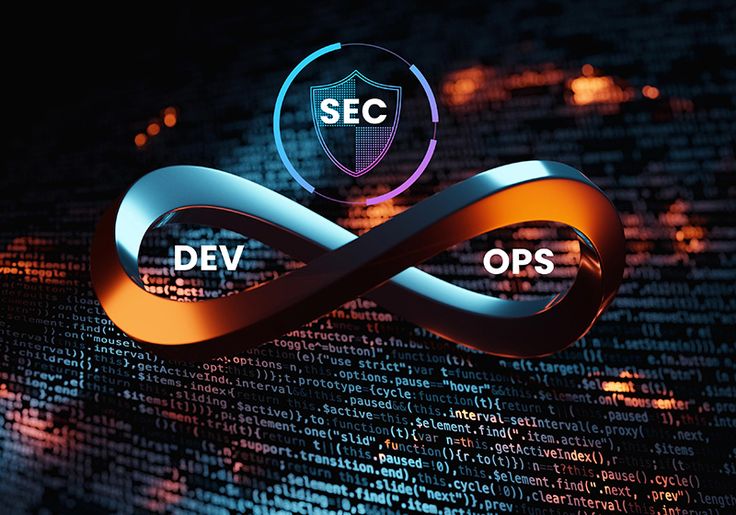
DevSecOps means integrating security into DevOps processes from the beginning of software development.
Instead of adding security at the end, teams build security into every stage of the pipeline.
Consequently, vulnerabilities are detected earlier and fixed faster.
Moreover, DevSecOps ensures that development, operations, and security teams work together.
Why DevSecOps Matters
Modern software systems change frequently.
Therefore, manual security checks cannot keep up with rapid deployments.
Additionally, attackers often target fast-moving systems because they may contain unnoticed vulnerabilities.
As a result, integrating security into the pipeline becomes essential.
Without DevSecOps, organizations risk deploying insecure code into production.
How a Cloud Pipeline Works
A cloud pipeline automates the process of building, testing, and deploying applications.
It typically includes:
- Code development
- Build process
- Testing stage
- Deployment stage
- Monitoring stage
Consequently, developers can release updates quickly and efficiently.
However, without security integration, each stage may introduce risks.
Core Principles of DevSecOps
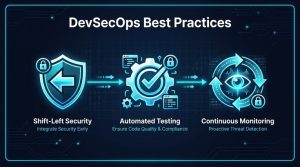
Shift Left Security
Security is applied early in the development cycle.
Therefore, issues are identified before deployment.
Automation
Security checks are automated within the pipeline.
As a result, teams reduce manual errors.
Continuous Monitoring
Systems are monitored even after deployment.
Consequently, threats are detected in real time.
Collaboration
Development, security, and operations teams work together.
Therefore, communication improves across all stages.
Key DevSecOps Practices
Secure Code Analysis
Static application security testing helps identify vulnerabilities in code.
Consequently, developers fix issues before deployment.
Dependency Scanning
External libraries are checked for security risks.
Therefore, unsafe components are avoided.
Container Security Integration
Containers are scanned before deployment.
As a result, vulnerabilities are reduced in production environments.
Infrastructure as Code Security
Configuration files are reviewed for misconfigurations.
Therefore, cloud environments remain secure.
Continuous Monitoring Tools
Security tools track system behavior in real time.
Consequently, threats are detected early.
Benefits of DevSecOps
Organizations gain several advantages when they adopt DevSecOps practices.
Firstly, they improve application security.
Secondly, they reduce production vulnerabilities.
Thirdly, they speed up incident response.
Additionally, they increase development efficiency.
Ultimately, businesses build more secure and reliable systems.
Common DevSecOps Challenges
Many organizations face challenges when adopting DevSecOps.
For example:
- Lack of security knowledge among developers
- Complex tool integration
- Resistance to workflow changes
- Limited automation experience
- Poor communication between teams
Therefore, proper training and structured implementation become important.
DevSecOps Tools Used in Industry
Popular tools include:
- Jenkins for CI/CD automation
- SonarQube for code analysis
- Snyk for vulnerability scanning
- Docker for containerization
- Kubernetes for orchestration
Consequently, teams can secure applications at every stage.
Frequently Asked Questions
What Is DevSecOps?
DevSecOps is the practice of integrating security into the DevOps pipeline from development to deployment.
Why Is DevSecOps Important?
It helps detect vulnerabilities early and prevents insecure applications from reaching production.
Does DevSecOps Slow Down Development?
No. Automation ensures security without reducing deployment speed.
Can Small Businesses Use DevSecOps?
Yes. Small businesses can adopt scalable DevSecOps practices using modern tools.
Why DevSecOps Skills Matter Today
Cloud development continues growing rapidly across industries.
Therefore, companies now seek professionals who understand both development and security.
Career opportunities include:
- DevSecOps Engineer
- Cloud Security Engineer
- Software Security Analyst
- Site Reliability Engineer
- Cloud Infrastructure Engineer
Consequently, DevSecOps skills remain highly valuable in the modern job market.
Why Learners Choose Port Harcourt Data School
Many learners struggle with DevSecOps because it combines development, operations, and security concepts. Therefore, Port Harcourt Data School provides structured learning that simplifies complex topics.
Hands-On Pipeline Practice
Students work with real CI/CD pipelines.
Consequently, they gain practical experience.
Real-World Security Integration
Learners practice adding security into development workflows.
Therefore, they understand industry expectations.
Beginner-Friendly Learning Path
Complex topics are broken into simple steps.
As a result, learners progress easily.
Career-Focused Training
Courses prepare students for DevOps and cloud security roles.
Therefore, employability increases.
Exposure to Modern Industry Tools
Students use tools commonly applied in real companies.
Consequently, they become job-ready.
Build Secure Cloud Pipeline Skills Today
DevSecOps has become essential because modern software development requires both speed and security. Therefore, businesses must integrate security into every stage of their cloud pipeline.
Meanwhile, professionals with DevSecOps skills are in high demand across global tech industries.
If you want practical DevOps and cloud security training, explore Port Harcourt Data School and start building your future-ready skills today.
Visit: https://portharcourtdataschool.com/
Ultimately, secure software delivery begins with strong collaboration, automation, and continuous learning.