
If you have been searching for where to learn data analysis in Port Harcourt, Rivers State, you have probably come across several options. But if you want world-class training that is 100% practical, one-on-one, and tailored to your personal career goals — there is one name that consistently rises to the top: Port Harcourt Data School.
In this article, we break down why Port Harcourt Data School is the number-one choice for aspiring data analysts and data scientists in Rivers State in 2026, what courses they offer, what makes their learning model different, and how you can enrol today.

What We Do at Port Harcourt Data School?
Port Harcourt Data School is a specialist data analytics and technology training institution based at Amaoba Plaza, No. 122 NTA Road, Location Junction (by Kilimanjaro Restaurant), Mgbuoba, Port Harcourt, Rivers State. Owned and managed by Mangrove Technologies Ltd, the school was founded with one clear mission:
To educate aspiring data analysts to become proficient in all the competencies needed in the modern workplace, giving every student the competitive advantage to succeed anywhere in the world.
Unlike general IT training centres that lump dozens of students into a classroom, Port Harcourt Data School operates on a fundamentally different model. Every single student is assigned a personal instructor and receives one-on-one, hands-on training from day one.
The #1 Reason to Choose Port Harcourt Data School: One-on-One Learning
Most training schools in Port Harcourt pack 20, 30, or even 50 students into a single class. The result? Students who are too shy to ask questions fall behind, instructors rush through modules to meet schedules, and graduates leave with theoretical knowledge but zero real-world confidence.
Port Harcourt Data School completely eliminates this problem.
- You are assigned a dedicated personal instructor from the very first day.
- Your learning pace is set by you, not by a crowded classroom.
- Every session is focused entirely on your progress, your questions, and your goals.
- Your instructor gives you real-time feedback as you work through hands-on exercises.
- You leave every session having actually done the work — not just watched someone else do it.
This is not just a teaching style. It is a complete commitment to your individual success.
“One student. One instructor. One goal: your success.” The Port Harcourt Data School learning model.
100% Practical, Hands-On Training — Zero Theory Overload
Here is the honest truth about most data analysis courses: they spend 80% of the time on theory and only 20% on doing. That is backwards. In the real world, employers do not hire you for what you know in your head. They hire you for what you can build, analyse, and deliver with your hands.
Port Harcourt Data School is built on a 100% practical learning philosophy. From Module 1 of any course, you are working with real datasets, real software, and real-world business scenarios. By the time you complete your training, you will have:
- Built real dashboards and reports in Power BI and Tableau.
- Written SQL queries against actual databases.
- Cleaned and transformed messy data using Python, R, or OpenRefine.
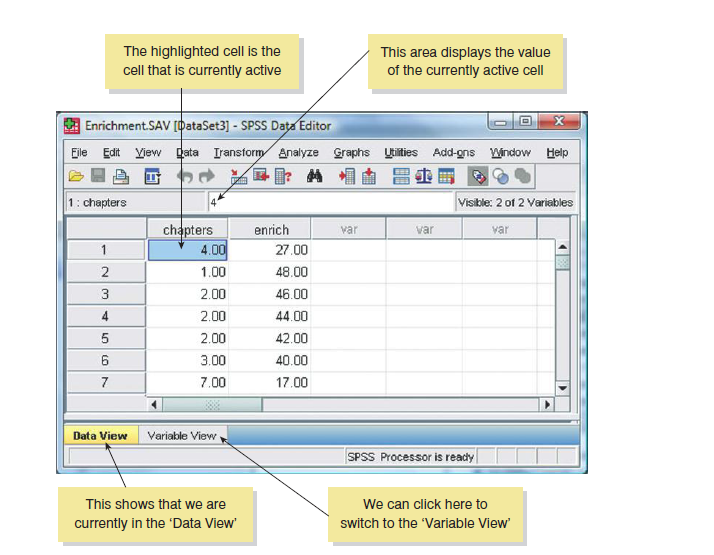
- Conducted statistical analyses using SPSS, STATA, or SAS.
- Solved real business problems using data, not just passed a multiple-choice exam.
This practical, first approach means that when you walk out of Port Harcourt Data School, you are job-ready. Not just certificate-ready.
Courses Offered in 2026 at Port Harcourt Data School
Port Harcourt Data School offers training at beginner, intermediate, and advanced levels across all the tools that the global data industry demands. Here is a breakdown of their core data analysis and data science courses:
Data Science & Analytics
- Power BI — Business intelligence, interactive dashboards, DAX, and report deployment across 13 deep modules.
- Tableau — Visual analytics and business intelligence reporting for decision-makers. Click Here.
- Python for Data Analysis — The world’s most in-demand programming language for data science. Click Here
- R for Data Analysis — Statistical computing and data visualisation widely used in research and finance.
- Advanced Excel — The most widely-used data tool in Nigerian organisations, taken to an advanced level.
- SPSS — Statistical analysis for academic, medical, and corporate research.
- STATA — Advanced data analysis and econometric research.
- SAS — Enterprise-grade statistical analytics software.
- Qlik — Interactive data visualisation and business intelligence.
- OpenRefine — Data cleaning and transformation for messy datasets.
Database Management
- SQL — Querying and extracting data from relational databases.
- PostgreSQL, MySQL, MongoDB — Modern and NoSQL database management.
Other In-Demand Tech Courses
- Artificial Intelligence (AI) — Now available at the school.
- Cybersecurity, Cloud Computing (AWS, Azure, Digital Ocean), Digital Marketing, and more.
Whether you are a complete beginner or an experienced professional looking to add a specific tool to your skill set, Port Harcourt Data School has a course designed for where you are right now.
How the Learning Journey Works
Port Harcourt Data School structures every course across three powerful phases to make sure your learning sticks — not just during class, but long after:
Phase 1: Pre-Class Preparation
- Pre-course learning materials so you arrive ready.
- Pre-course assignments to activate your thinking before day one.
- Technical setup and device configuration so no time is wasted in class.
Phase 2: Physical, Instructor-Led Training
- One-on-one sessions with your assigned personal instructor.
- 100% hands-on, practical exercises on real tools and real data.
- Technical support throughout every session.
- Assignments after each module to reinforce what you have learned.
Phase 3: Post-Class Support
- Full access to class recordings, revise anytime, anywhere.
- Study group membership so you learn alongside peers.
- Course completion certification recognised by leading employers.
- Exam registration support for professional certifications.
- Access to mock exams and practice questions.
- Ongoing support, because learning does not stop when the course ends.
This three-phase structure is why Port Harcourt Data School graduates do not just pass exams, they build real careers.
Internship Opportunity: Bridge the Gap Between Training and Employment
Completing a course is one thing. Getting your first data role is another. Port Harcourt Data School bridges that gap with a structured internship programme for qualifying graduates. This gives students real workplace experience with partner organisations, the kind of experience that moves a CV from the ‘maybe’ pile to the ‘hire now’ pile.
Data analysis internship experience through Port Harcourt Data School means you don’t just graduate with a certificate — you graduate with a track record.
Who Is Port Harcourt Data School Right For?
You are the perfect candidate for Port Harcourt Data School if any of these describe you:
- You are a recent graduate looking to break into the data industry.
- You are a professional in oil and gas, finance, health, or government who wants to use data better.
- You are a researcher who needs SPSS, STATA, or R for your academic work.
- You are a business owner who wants to make smarter, data-driven decisions.
- You have tried online courses but need real, in-person, instructor-led accountability.
- You want a globally competitive data skill, trained right here in Port Harcourt.
Pricing and Enrolment
Port Harcourt Data School offers flexible pricing based on the course and your specific learning needs. Because every student receives a personalised, one-on-one experience, they recommend you contact them directly to discuss the best package for your goals and timeline.
To get current 2026 course fees and available start dates, reach them through any of the following:
- Phone / WhatsApp: 09120904879
- Email: info@portharcourtdataschool.com
- Website: www.portharcourtdataschool.com
- Physical Location: Amaoba Plaza, No. 122 NTA Road, By Kilimanjaro Restaurant, Mgbuoba, Port Harcourt.
Classes run on a rolling intake basis, so you can start whenever you are ready. There is no need to wait for a new term or semester.
Why Now Is the Best Time to Start
The demand for data professionals in Nigeria is not slowing down. It is accelerating. Port Harcourt, as one of Nigeria’s most economically active cities, is home to oil multinationals, financial institutions, government agencies, startups, and SMEs — all generating data that very few people yet know how to analyse and act on.
The professionals who invest in data skills right now, in 2026, are positioning themselves for roles that offer some of the highest salaries in the Nigerian economy ,and increasingly, remote roles paying in USD for international employers.
The question is not whether the data economy will grow. It already has. The only question is: will you be ready to meet it?
Ready to Start Your Data Journey?
Port Harcourt Data School is not just a training centre. It is the place where your data career begins, with a personal instructor in your corner, real tools in your hands, and a practical curriculum designed to make you the most hire-able version of yourself.
There is no reason to wait. Seats are limited because every student gets personal attention. Contact Port Harcourt Data School today to secure your spot. https://www.portharcourtdataschool.com
| Enrol at Port Harcourt Data School Today
Call/WhatsApp: 09120904879 | www.portharcourtdataschool.com | NTA Road, Mgbuoba, PH |