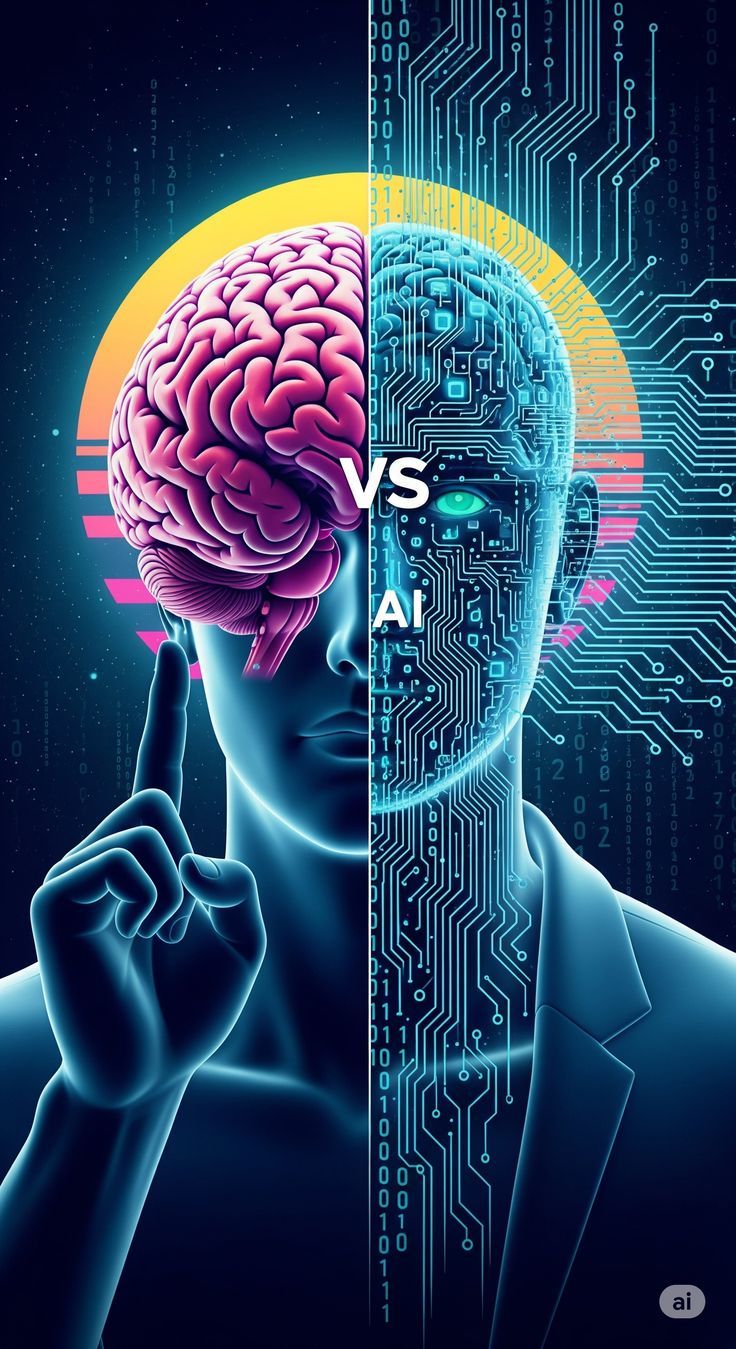
AI is transforming every industry, but does that mean your job is at risk? Here is what you need to know, and how to turn this change into your biggest opportunity yet.
Artificial Intelligence is everywhere right now. You see it in the news, hear about it at work, and maybe even use it every day without realising it. But as a professional in Port Harcourt, one question might be sitting at the back of your mind:
The honest answer is both depending on what you do next. The professionals who understand how AI works, and how it differs from human intelligence, will be the ones who lead the next decade of work in Nigeria and Africa at large. Those who ignore it risk being left behind.
In this article, we break it all down in simple, practical terms. No jargon. No hype. Just what you actually need to know.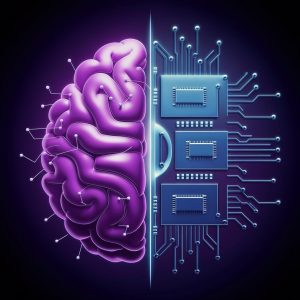
What Exactly Is AI?
Artificial Intelligence is a type of technology that allows computers and machines to learn from data, recognise patterns, and make decisions tasks that we once thought only humans could do.
Think of AI like a very fast, very focused student. Give it millions of examples of something say, customer emails, medical scan images, or financial transactions and it will learn to identify patterns and respond in useful ways. Tools like ChatGPT, Google Translate, and the recommendation engine on YouTube are all powered by AI.
But here is what AI is not: AI is not conscious. It does not feel, understand context the way humans do, or think creatively from lived experience. It processes data extremely well, but it does not truly understand.
The numbers tell an important story: AI takes some jobs away, but it creates even more. The difference between losing a job and gaining one depends entirely on your skills and how quickly you adapt.
AI Intelligence vs Human Intelligence
To stay ahead, you need to understand where AI is strong, where humans are strong, and most importantly where the two work best together.
| Capability | AI | Human |
|---|---|---|
| Processing large amounts of data | Extremely fast and accurate | Slow and limited |
| Emotional intelligence | Absent — it simulates, not feels | Core human strength |
| Creativity & original ideas | Pattern-based, not truly original | Deeply creative |
| Repetitive tasks (e.g. data entry) | Handles with ease, 24/7 | Tiring and error-prone |
| Critical thinking in new situations | Struggles outside trained data | Natural and adaptive |
| Ethical judgment & moral reasoning | Cannot reason morally | Essential human role |
| Language & communication | Very capable, improving fast | Nuanced and context-rich |
The bottom line? AI excels at scale, speed, and repetition. Humans excel at empathy, judgment, creativity, and navigating the unexpected. The future belongs to professionals who can combine both.
Which Jobs in Port Harcourt Are Most at Risk?
Port Harcourt is one of Nigeria’s most important economic hubs, driven by oil and gas, banking, healthcare, logistics, and a growing tech sector. Here is a frank look at how AI is touching these industries:
Oil & Gas
AI is already being used for predictive maintenance of pipelines, analysing seismic data, and optimising drilling operations. Roles that involve manual data logging, routine reporting, or repetitive analysis are being automated. Engineers and geoscientists who understand how to work with AI tools, however, are becoming more valuable, not less.
Banking & Finance
AI handles fraud detection, loan risk assessment, customer chatbots, and financial forecasting faster than any human can. Entry level data entry and basic analysis roles are declining. But relationship managers, financial advisors, and compliance specialist’s people who need trust and judgement are still very much in demand.
Healthcare
AI is helping doctors detect diseases from medical scans with remarkable accuracy. Administrative tasks like scheduling, billing, and record-keeping are being streamlined. But empathy, bedside manner, complex diagnosis, and doctor-patient relationships? Those remain deeply human.
Retail & Logistics
Inventory management, demand forecasting, and delivery routing are all being handled by AI systems. Yet customer service, supplier negotiations, and supply chain strategy still rely on human insight.
- Data analysis and interpretation (understanding the “why” behind the numbers)
- AI model training, monitoring, and quality control
- Strategic thinking and complex decision-making
- Leadership, team management, and people skills
- Creative problem-solving and innovation
- Ethical oversight of AI systems
The Skills That Will Make You Unstoppable
The single biggest mistake professionals in Port Harcourt can make right now is to wait and see. The time to build AI-related skills is now, before the demand for these skills outpaces the supply of qualified people.
Here are the most important areas to focus on:
Data literacy
You do not need to be a programmer to be data literate. Understanding how to read data, draw insights from it, and use tools like Excel, Power BI, or Google Sheets is a foundational skill every modern professional needs. Companies across Port Harcourt are drowning in data they need people who can make sense of it.
AI tools and prompt engineering
Learning to use AI tools like ChatGPT, Midjourney, Copilot, and others effectively is a skill in itself. Knowing how to ask AI the right questions what is called “prompt engineering” can make you significantly more productive than your peers.
Python and basic programming
Python is the language of AI and data science. Even a basic understanding of Python can open enormous career opportunities in data analysis, machine learning, and automation. You do not need to become a software engineer just learn enough to be dangerous.
Machine learning fundamentals
Understanding how AI models learn and make predictions even at a high level helps you work smarter with AI tools, spot errors in AI outputs, and have credible conversations with technical teams.
Critical thinking and communication
These are the skills AI cannot replace. The ability to interpret AI generated insights, question assumptions, and communicate findings clearly to stakeholders will always be in demand.
Why Port Harcourt Professionals Have a Unique Advantage
Here is something that does not get said enough: Nigeria is one of the youngest, most dynamic nations in the world. Port Harcourt sits at the intersection of energy, commerce, and an increasingly digital economy. That means the demand for AI literate professionals here is going to be immense and right now, supply is low.
Every global tech company expanding into Africa needs local talent who understand both technology and local context. That is you, if you choose to invest in your skills today.
The opportunity is not in Silicon Valley. It is right here. In your city. In your industry.
Where to Start Your AI Learning Journey in Port Harcourt
You do not need to travel abroad or spend a fortune to learn these skills. Africa has world class tech education right on your doorstep.
Port Harcourt Data School part of AI School Nigeria is widely regarded as one of the best tech training institutions in Africa. Their programmes are specifically designed for working professionals who want to build practical, job ready skills in data science, machine learning, and AI.
What makes Port Harcourt Data School standout?
- Curriculum built for the African tech market and local industry needs
- Practical, hands on projects using real-world Nigerian datasets
- Instructors who combine deep technical expertise with industry experience
- Flexible learning options suitable for working professionals
- A strong alumni network connecting graduates to jobs across Nigeria and beyond
- Recognised by top employers in oil & gas, fintech, and healthcare sectors
Whether you are a fresh graduate trying to stand out, a manager looking to lead digital transformation at your company, or a professional mid-career looking to future-proof your job AI School Nigeria has a pathway for you.
CONCLUSION
Let us be completely honest. AI will disrupt your industry. Some jobs will change significantly, and some will disappear. But new, better paid, and more interesting jobs will take their place, and they will go to the people who prepared.
The professionals who thrive in the next decade will not be the ones who feared AI they will be the ones who learned to use it, direct it, and build with it.
Port Harcourt has always produced resilient, ambitious professionals. The city that powers Nigeria’s energy sector can absolutely power Nigeria’s AI revolution too.
The question is: will you be part of it?