
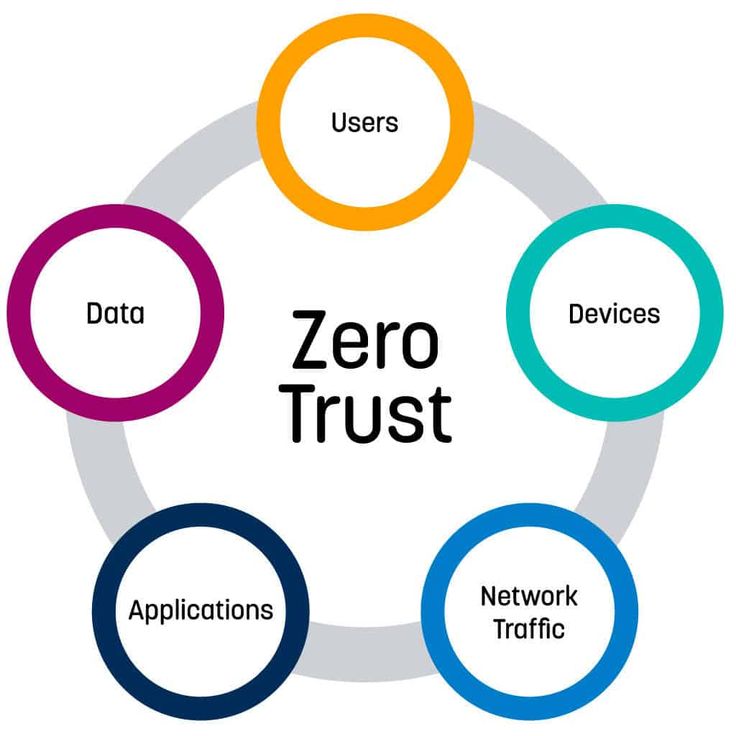
Cybersecurity threats continue rising as more Nigerian businesses move their operations online. As a result, hackers now target corporate systems, customer databases, and internal networks with more advanced techniques. Therefore, companies must adopt stronger protection strategies like the Zero Trust security model.
Many business owners feel frustrated when systems get hacked repeatedly. Meanwhile, some startups struggle because they lack proper security structures. Consequently, data breaches often lead to financial loss, damaged reputation, and reduced customer trust.
Naturally, one important question appears:
How can businesses stop hackers from accessing internal systems completely?
The answer begins with the Zero Trust security model.
What Is the Zero Trust Security Model?
The Zero Trust security model is a cybersecurity approach that assumes no user or device should be trusted automatically.
Instead, every access request must be verified continuously.
Therefore, even users inside a network must prove their identity before gaining access.
Think of it like a high-security building.
Every person must show identification at every checkpoint, not just at the entrance.
Similarly, Zero Trust verifies users at every stage of access.
Why Nigerian Businesses Are Adopting Zero Trust
Cyberattacks continue increasing across Africa, especially in growing digital economies like Nigeria. Therefore, businesses now require stronger protection frameworks.
Moreover, traditional security models are no longer enough because attackers often bypass perimeter defenses.
Consequently, companies are shifting toward Zero Trust systems for better protection.
How Zero Trust Security Works
Zero Trust operates based on continuous verification.
First, it checks user identity before granting access.
Next, it evaluates device security status.
Then, it monitors behavior during the entire session.
Finally, it restricts access if unusual activity appears.
Because of this structure, attackers find it difficult to move freely inside systems.
Core Principles of Zero Trust Security
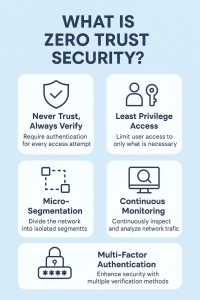
Never Trust, Always Verify
Every request must be verified before access is granted.
Therefore, no automatic trust exists within the system.
Least Privilege Access
Users only receive the minimum access needed to perform their tasks.
As a result, unnecessary exposure is reduced.
Continuous Monitoring
Systems constantly monitor user behavior and network activity.
Consequently, suspicious actions are detected early.
Micro-Segmentation
Networks are divided into smaller zones.
Therefore, attackers cannot easily move across systems.
Benefits of Zero Trust for Nigerian Enterprises
Businesses gain several advantages when adopting Zero Trust security.
Firstly, they reduce internal and external threats.
Secondly, they improve data protection across systems.
Thirdly, they gain better visibility into user activities.
Moreover, they strengthen compliance with security standards.
Ultimately, organizations build stronger trust with customers.
Challenges Businesses Face Without Zero Trust
Many companies still rely on traditional security systems.
However, this approach often creates vulnerabilities.
For example:
- Weak authentication systems
- Easy internal access for attackers
- Limited monitoring capabilities
- Poor visibility of user activity
- Delayed threat detection
Therefore, businesses become more exposed to cyber risks.
Real-World Impact of Zero Trust Adoption
Companies that implement Zero Trust often experience fewer breaches.
Additionally, IT teams respond faster to threats.
Meanwhile, sensitive data becomes better protected from unauthorized access.
Consequently, business operations become more stable and secure.
Frequently Asked Questions
Q1: What is the Zero Trust security model?
A: It is a security approach that requires continuous verification for all users and devices.
Q2: Why do Nigerian businesses need Zero Trust?
A: Because cyber threats are increasing and traditional systems are no longer enough.
Q3: Does Zero Trust stop all attacks?
A: No system is perfect, but Zero Trust significantly reduces risks.
Q4: Is Zero Trust only for large companies?
A: No. Small and growing businesses can also benefit from it.
Why Learning Cybersecurity Matters Today
Cybersecurity skills continue growing in demand across Nigeria and globally. Therefore, professionals who understand modern security models remain highly valuable.
Career paths include:
- Cybersecurity Analyst
- Network Security Engineer
- SOC Analyst
- IT Security Specialist
- Cloud Security Professional
Consequently, cybersecurity knowledge opens strong career opportunities.
Why Port Harcourt Data School Is a Strong Choice for Learning
Many learners struggle with cybersecurity because they lack structured, real-world training. However, Port Harcourt Data School provides a practical learning environment that focuses on industry needs.
Practical Cybersecurity Training
Students work with real systems and real scenarios.
Therefore, learning becomes more effective than theory alone.
Industry-Focused Curriculum
Training aligns with current cybersecurity job requirements.
As a result, students gain relevant workplace skills.
Expert-Led Instruction
Experienced instructors guide learners through complex topics.
Consequently, difficult concepts become easier to understand.
Hands-On Skill Development
Students practice real security configurations.
Therefore, they build confidence through experience.
Career Readiness Support
Training also focuses on helping learners prepare for job opportunities.
Ultimately, students gain direction for their future careers.
Take Control of Your Business Security Today
Cyber threats continue evolving, and businesses must adapt quickly to survive in the digital world. Therefore, adopting modern frameworks like Zero Trust is no longer optional.
Meanwhile, organizations that ignore cybersecurity often face repeated attacks and financial losses.
If you want to build strong cybersecurity skills and understand how modern security systems work, you can explore Port Harcourt Data School today.
👉 Visit: https://portharcourtdataschool.com/
Ultimately, strong security starts with the right knowledge and the right learning environment.